
Littleton, CO · Roofing service
Storm and Wind Damage Repair in Littleton, CO
Littleton roofs are built to a 136 mph design wind speed. When a chinook or downslope event beats that, we tarp, document and rebuild.
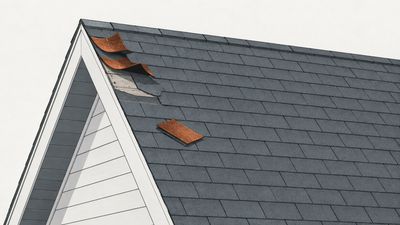
What wind actually does to a Front Range roof
Wind damage starts at edges. Uplift gets under the first course at a rake or eave, breaks the seal strip, and then works progressively inward course by course. This is why drip edge at both eaves and rakes, and a six-nail fastening pattern, matter more here than in milder climates.
Littleton's adopted 136 mph ultimate design wind speed is not a theoretical figure. Downslope wind events coming off the Front Range regularly produce gusts that will find any weakness in an edge detail, and they arrive outside the hail season people plan around.
Where storm damage shows up first
- Rake edges. The sloped edge of a gable. Without drip edge, this is the single most vulnerable line on the roof.
- Ridge and hip caps. Exposed on two faces, so they lift and tear before field shingles do.
- The first two courses above the eave. Uplift pressure concentrates here.
- Anything that projects. Swamp cooler housings, satellite mounts, skylight flashing, loose vent caps.
- Fence-line debris. Shingles in the yard are the obvious sign, but check the neighbors' yards downwind too.
The under-nailing problem
When shingles come off in a wind that should not have taken them, the cause is almost always fastening rather than product.
Littleton requires a minimum of six nails per shingle. Many manufacturers specify four as their standard pattern, and their Class H high-wind listings are usually contingent on the enhanced six-nail pattern being used. So a crew working from the wrapper rather than the city policy produces a roof that is both under-code and outside its own wind warranty.
Other fastening failures we find after wind events:
- High nailing. Nails placed above the nailing strip catch only one layer instead of two.
- Overdriven nails that cut through the mat.
- Angled nails whose heads sit proud and prevent the course above sealing.
- Shingles installed in cold weather that never got warm enough to seal before the first wind.
None of this is visible from the ground on an intact roof. It becomes visible the day a storm finds it.
What to do in the first 48 hours
- Stay off the roof. Storm-damaged decking may not hold weight.
- Photograph everything from the ground, including debris in the yard and the date on your phone.
- Contain water inside. Buckets, and a small hole in a bulging ceiling to let water drain in a controlled place rather than bringing the whole thing down.
- Call your carrier to open the claim and ask about emergency mitigation coverage.
- Keep receipts for anything you spend on immediate protection.
- Do not sign anything on your doorstep.
Emergency tarping
A tarp is temporary protection, not a repair. Done properly it is mechanically fastened and run over the ridge so water cannot get under the top edge, which means it involves putting fasteners through roof covering — deliberately, in places that will be replaced.
Done badly, a tarp weighted with bricks moves in the next wind and channels water into a new place. We would rather do it properly than have you find that out.
The post-storm door knock
- Which jurisdiction license do you hold? Colorado has no state roofing license. Littleton issues D-5, Englewood D-2, Centennial and Columbine Valley their own, Jefferson County its own.
- Where were you based two years ago? A warranty from a company that leaves the state after the season is not a warranty.
- Is this a contract or an inspection authorization? Read what you are signing. Contingency agreements signed on a doorstep can bind you to a contractor before anyone has seen your roof.
- Are you offering to cover my deductible? If yes, that is fraud and the claim is in your name.
Rebuilding properly
Storm repair above 100 square feet is a replacement under Littleton's definition, which means full tear-off and the current code package. Below it, it is a repair.
Either way, the edge details are where we would spend the attention: drip edge at eaves and rakes, correct fastening pattern, and ice barrier where required. Those are the details that determine whether the next storm does this again.
Hail damage is assessed differently → · How the claim process works →