
Code comparison
Five Ice Barrier Rules Within Twenty Minutes of Littleton
Same weather, same hail, same freeze-thaw. Five neighboring building authorities, and five genuinely different answers to whether your roof needs ice and water barrier.
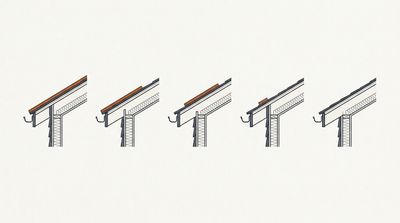
We work under fifteen separate building authorities across Arapahoe, Douglas and Jefferson counties. Of all the requirements that differ between them, ice barrier is the one where the spread is widest and the cost consequence is largest.
The five positions
Cherry Hills Village requires ice barrier in place of standard underlayment. Littleton requires it at the eaves of all conditioned structures, two feet inside the wall line. Jefferson County requires it for a named list of covering types. Douglas County requires it only above 7,000 feet. Lone Tree states it is not required.
| Authority | Requirement | Effect on cost |
|---|---|---|
| Cherry Hills Village | In place of standard underlayment, because of the Village's ice-damming history | Highest |
| City of Littleton | ASTM D1970, at eaves of all conditioned structures, 2 ft inside the exterior wall line | Moderate |
| Jefferson County | Required for asphalt shingles, metal roof shingles, mineral roll roofing, slate, wood shingles and wood shakes | Moderate |
| Douglas County | Only above 7,000 ft elevation, extending at least 24 in inside the wall line | Usually none locally |
| City of Lone Tree | Not required | None |
Every one of those is taken from the authority's own published material, and each is linked from the relevant area page on this site.
Why the spread exists
It is tempting to assume one of these authorities is wrong. They are not. They are answering slightly different questions.
Douglas County's elevation threshold reflects the model code approach: ice damming correlates with sustained cold, and elevation is a reasonable proxy for it across a county that spans a large altitude range. Highlands Ranch sits below 7,000 feet; parts of western Douglas County do not.
Cherry Hills Village's blanket rule reflects local experience rather than a model. The Village has an ice-damming history, and it responded by requiring the membrane everywhere rather than at the eaves.
Littleton's two-foot-inside-the-wall-line rule is the classic code formulation, and it is the one most people misread.
The two-foot measurement, properly understood
The dimension is measured from the exterior wall line inward, not from the edge of the roof.
That distinction matters because of the overhang. On a house with a two-foot eave, the barrier has to cover the overhang and continue two feet past the wall — four feet of coverage from the roof edge. On a house with a three-foot overhang, five feet.
The logic is that the vulnerable zone is where warm roof meets cold roof. The overhang is always cold because there is no heated space beneath it. The ice dam forms at that transition and backs water up past it, which is why the membrane has to extend into the heated portion rather than stopping at the wall.
A contractor who installs one course of membrane along the eave and calls it done has misread the requirement, and on a deep-eaved house has missed it by a wide margin.
What the membrane actually does
Ordinary underlayment is a shedding layer. It sits under the shingles and directs water that gets past them down and out. It works because water is moving downhill.
Ice barrier is a different product doing a different job. It is self-adhering and it seals around fasteners. When a dam forces standing water back up under the covering, an ordinary underlayment has fastener penetrations that water simply walks through. A sealed membrane does not.
That is the whole argument. Not better underlayment — a different failure mode entirely.
So should you install it where it is not required?
This is the genuinely useful question, and the honest answer is that it depends on your house, not on your postcode.
Install it regardless of code if:
- You get icicles along a particular edge every winter
- One gutter run ices up and others do not
- You have north-facing eaves over living space
- You have cathedral ceilings or a finished attic with limited insulation depth
- There is past water staining on a ceiling near an exterior wall
- A heated roof section drains onto an unheated one
The code position is reasonable if:
- You have never had ice on the roof or in the gutters
- The attic is well insulated and properly ventilated
- The roofline is simple with generous overhangs
The thing that actually prevents ice dams
Worth saying plainly, because it gets sold the wrong way round: ice barrier does not prevent ice dams. It limits the damage when one forms.
Ice dams are a heat-loss problem. Warm air escaping into the attic melts snow from underneath. Fix that and the dam does not form.
Which means the real remedies are attic insulation and ventilation. Littleton's own code requires that roof ventilation not be reduced below existing conditions, with net free ventilating area of 1/150 of the vented space, or 1/300 where all conditions for reduced ventilation are met.
If your house dams ice every year, adding membrane and changing nothing else means you have bought insurance rather than a fix. Worth having. Not a solution.
More on what actually stops ice dams →
How to use this when comparing quotes
Ask every bidder two questions:
- Which authority issues my permit? If they cannot answer, they have not checked, and the specification they have quoted is a guess.
- What ice barrier coverage is in this price, and is that the code minimum or more?
Those two questions separate a scoped quote from a number. A Cherry Hills Village job priced on Littleton's eaves-only rule is underpriced and will either be varied upward or built wrong. A Lone Tree job priced with full coverage may simply be more roof than you need.
Find out which authority covers your address first — here is how — and everything else follows from that.