
Materials
Are Class 4 Impact-Resistant Shingles Worth It in Colorado?
The honest answer is that it turns on one number, and your roofer does not have it. Your insurer does.
This question comes up on almost every replacement quote in the metro, and it usually gets answered by whoever has something to sell. Here is the version with the uncertainty left in.
Two ratings, commonly confused
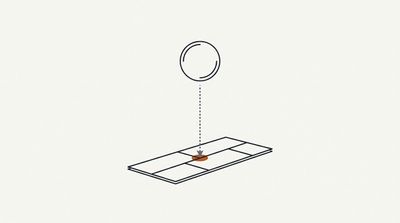
Class 4 is the top impact rating under UL 2218, tested by dropping a two-inch steel ball on the shingle twice in the same spot. Class H is a wind rating under ASTM D7158. They measure different things, and Littleton's code requires Class H, not Class 4.
This matters because the two get used interchangeably by salespeople. A shingle that is Class H compliant for Littleton's 136 mph design wind speed may be an ordinary impact-rated product. The upgrade to Class 4 is separate, optional, and additional.
What the test actually is
UL 2218 drops a steel ball from a specified height onto the shingle, twice in the same place. The shingle passes its class if the mat does not crack.
Two honest caveats about that:
- A steel ball is not hail. Hail is irregular, it arrives at an angle, and it is driven by wind. The test is a repeatable proxy, not a simulation.
- It tests the mat, not the surface. A Class 4 shingle can lose granules and take cosmetic damage while passing. Granule loss still shortens service life.
None of which makes the rating meaningless. It is a real difference in a real property of the product. It is just not armour.
The maths, and the one number you need
There are three variables:
- The upfront premium for Class 4 over a standard architectural shingle.
- The annual insurance discount, if your carrier offers one.
- How long you will own the house.
Two of those you know or can find out easily. The third — the discount — is the one that decides it, and it is entirely a matter for your carrier.
Many Colorado insurers offer a reduction for impact-resistant roofing, because the state is in hail alley and fewer claims is worth money to them. The size varies a great deal. Some offer a meaningful percentage of the dwelling premium. Some offer very little. Some offer nothing at all.
“If I install a UL 2218 Class 4 impact-resistant roof, what is my annual premium reduction, and do you require documentation of the product?”
Get it in writing. Then divide the upfront premium by the annual saving, and you have your payback period in years. Compare that against how long you plan to own the house.
If a roofing contractor quotes you a discount figure, be sceptical. They do not have access to your policy, and the number varies by carrier, by policy and sometimes by county.
The part that is not on the spreadsheet
Payback maths misses something real, and it cuts in favor of Class 4 on the Front Range.
The Colorado Front Range records the highest frequency of large hail in North America. Hail season runs roughly mid-April to mid-September. Over a twenty-year roof life, a house here will see multiple significant events.
Every one of those that does not generate a claim is worth something beyond the premium:
- You keep your deductible. Colorado wind-and-hail deductibles are frequently separate and higher than the standard one, sometimes a percentage of the dwelling value rather than a flat sum.
- You keep your claims history clean, which affects renewal terms.
- You avoid the disruption of a claim, an adjuster, a permit and a week of work.
None of that appears in a simple payback calculation, and all of it is real.
When we would say yes
- Your carrier offers a substantive discount — this is the big one.
- You intend to stay in the house long enough to see the payback.
- Your wind-and-hail deductible is percentage-based and therefore large.
- You have already claimed once and are concerned about renewal.
- The roof is large, so a claim would be expensive and disruptive.
When we would say no
- Your carrier offers nothing, or a token amount.
- You are likely to sell within a few years. The next owner gets the benefit; you paid.
- The budget is tight and the money would be better spent on ventilation, sheathing or flashing detail — all of which affect whether the roof lasts at all.
That last point is worth dwelling on. A Class 4 shingle on a badly ventilated deck with failing flashings is an expensive covering on a roof that will fail for unrelated reasons. Spend on the assembly before spending on the top layer.
What you still have to get right
Class 4 does not exempt you from anything. Inside Littleton city limits the same requirements apply:
- Full tear-off to deck, no overlays
- Minimum six nails per shingle
- ASTM D7158 Class H wind listing, with manufacturer documentation at permit intake
- Ice and water barrier two feet inside the exterior wall line
- Drip edge at eaves and rakes
And the fastening point matters especially here: a premium shingle installed with four nails where six are required is a premium shingle outside its own wind warranty.
The full Littleton code guide →
The short version
Ring your insurer and ask what the discount is. If it is substantial and you are staying put, Class 4 is usually a good decision on the Front Range. If it is nominal, put the money into the parts of the roof nobody can see.
Either way, do not let it be decided by whoever is quoting the job.