
Solar
Replacing a Roof With Solar Panels in Littleton: The Permit Sequence
If your house has solar panels, your Littleton roof permit does not get issued until a separate licensed solar contractor pulls their own permit. Here is how to sequence it so it does not cost you a season.
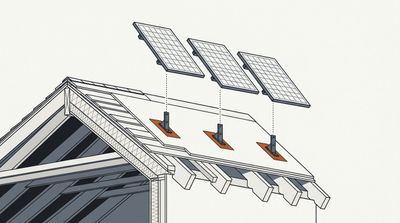
Solar uptake across the south Denver metro has been substantial, and a lot of those arrays now sit on roofs approaching the end of their service life. Which produces a question nobody thinks about until they need the answer.
The rule, stated plainly
If City of Littleton records or other evidence show the structure has a photovoltaic assembly, issuance of the roof permit is delayed until a solar contractor licensed by the city has obtained a permit to remove and replace the system. A roofing contractor who removes the array themselves can trigger a stop work order or a municipal summons.
This is Section 4 of Policy #24-001. It is short, it is unambiguous, and it is almost entirely absent from roofing content about Littleton.
Why the city cares
A rooftop PV array is an energised electrical system mounted through the roof covering into the structure. Three separate concerns sit in that sentence:
- Electrical safety. A PV array under sun is generating whether or not anyone has switched anything off. Disconnecting it correctly is licensed electrical work.
- Structural attachment. Mounts penetrate the deck and attach to framing. How they are removed and re-flashed determines whether your new roof leaks at forty points.
- Accountability. Separate permits mean a licensed party is on record for the array and a licensed party is on record for the roof.
The mount flashing point is the one homeowners underestimate. Every mount is a penetration. A roofer who removes an array and re-sets it without the proper flashing detail has created dozens of potential leak paths that will not show up until the following spring.
The sequence that works
- Confirm you actually have a permitted array on record. If your panels were installed by a previous owner, city records may or may not reflect it. This is worth establishing first, because it can raise its own questions.
- Contact a solar contractor licensed by the City of Littleton. Ideally your original installer, who knows the system and whose warranty is at stake. If they are no longer trading, you need another city-licensed solar contractor.
- The solar contractor pulls their permit to remove and replace the system.
- Your roofing contractor applies for the roof permit, which can now be issued.
- Panels come off.
- The roof is replaced to the full Littleton package: tear-off to deck, six nails per shingle, Class H product, ice barrier two feet inside the wall line, drip edge at eaves and rakes.
- Panels go back on by the solar contractor, with new flashings at every mount.
- Inspections close both permits.
Steps 2 and 3 are the ones that take calendar time. Start them before you have committed to a roofing schedule, not after.
What it does to your timeline
A straightforward Littleton reroof is one to three working days of crew time. With solar, you are coordinating two trades, two permits and two inspection sequences.
The roofing work itself does not take meaningfully longer. What extends is everything around it: the solar permit, the detach visit, the reset visit, and the gap between them where your roof has to be complete and weathertight before panels can go back.
Plan in weeks, not days. And plan it outside hail season if you can, because the worst version of this is discovering you need the sequence in August after a storm, when every solar contractor in the metro is already booked.
The decision worth making early
If you are considering solar and your roof is more than about fifteen years old, do the roof first.
A solar array is typically warranted for decades. An asphalt roof in this climate is not. Installing panels on a roof with a few years left means paying for a detach and reset well before the panels have earned their keep — and paying it at whatever labor rates apply then.
Ask your solar installer directly what a future detach and reset would cost. A reputable one will tell you, and will often raise the roof question themselves.
If it is an insurance claim
Where hail has totalled a roof with solar on it, detach and reset is a legitimate cost of replacing that roof. It is also one of the line items most commonly missing from an initial scope.
Raise it with your adjuster explicitly. Ask whether detach and reset is included, and get the answer in writing before work starts. If the array itself was damaged by the same storm, that is a separate conversation with its own documentation requirements.
More on roof insurance claims →
Questions to ask a roofer about your solar
- Have you done a Littleton roof with solar before?
- Which city-licensed solar contractors do you work with?
- Who is responsible for the mount flashings on reset?
- How long between panels coming off and going back on?
- What happens if the roof is finished and the solar contractor is not available?
If a contractor offers to handle the panels themselves to save you the trouble, that is the end of the conversation. They are either unaware of the requirement or willing to work around it, and neither is what you want on your roof.
Call us on (720) 894-1857 and we will map the sequence for your address before anything is committed.